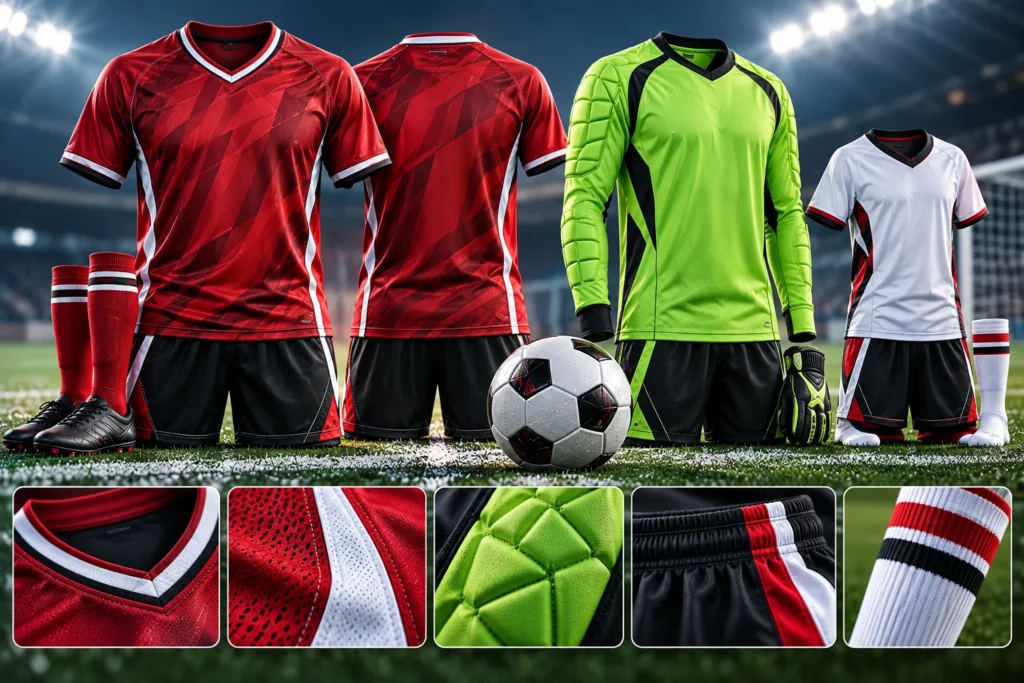
A soccer jersey’s price is set before decoration even enters the conversation, because the garment itself is built from two different fabrics in two different zones, and a goalkeeper build changes the spec entirely. Outfield or goalkeeper, jersey-only or full kit, and how much of the surface carries a crest, sponsor panel, or squad number move the number more than colour count ever does.
That holds whether you call it a jersey, the way most US buyers search for it, or a kit, the way clubs across the UK, EU, and Australia order it. The construction underneath is identical either way, and knowing which of those three levers is doing the work turns a quote from a guess into something you can plan a season around.
This walks through each driver the way our own soccer jersey line prices it on our own factory floor, then shows exactly what to send to get an exact number back within 24 hours, not a range.
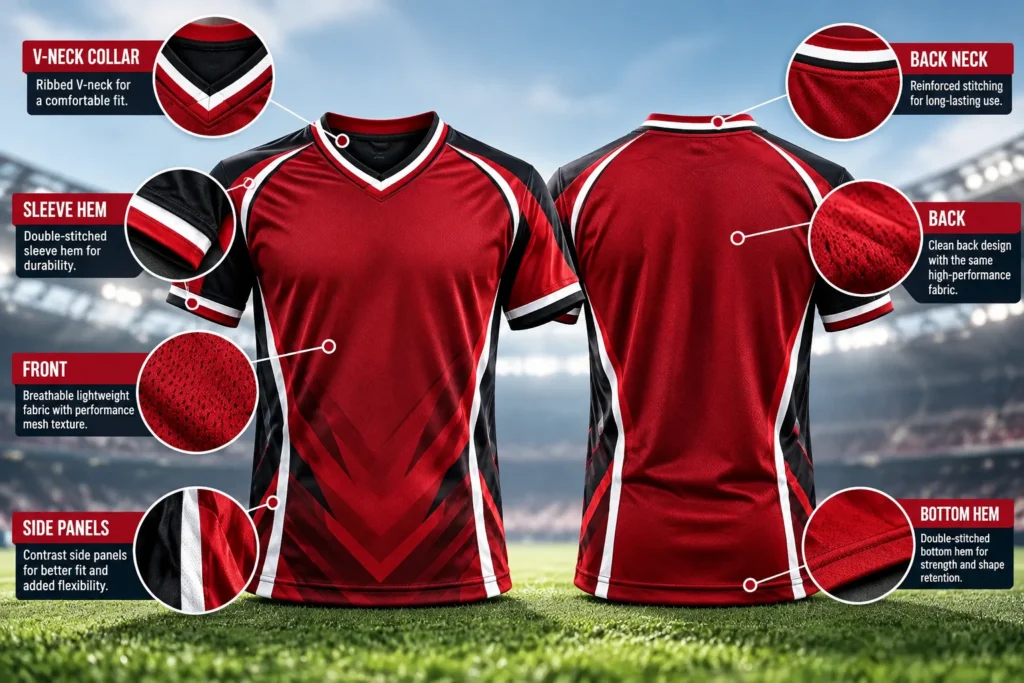
Most budget jerseys are cut from one fabric weight across the whole garment, which is cheaper to produce but wrong for a 90-minute match. Our own build runs the torso in 140 GSM moisture-wicking interlock, dense enough to hold a sharp sublimated print, and the underarm and side panels in 120 GSM micro-mesh, open enough to vent the two zones that generate the most heat during a match. That’s two separate knits joined at the seam, not one fabric with a lighter feel.
Pricing that zoning means pricing two fabric purchases, two cutting patterns, and a seam join between them, before decoration is even part of the conversation. A GSM number itself isn’t a marketing figure. It’s a standardized measurement of mass per unit area, tested the same way under ASTM D3776 whether the fabric is knit or woven, which is why two suppliers quoting “140 GSM” are actually describing the same weight of material.
The mesh panels run lighter than the interlock body by design, not as a cost-cutting shortcut. A jersey built from mesh alone would print poorly and wear through faster at the torso; one built from interlock alone would run hot through the match. Zoning the fabric is what lets a jersey do both jobs at once, and a factory quoting your order has to price both fabrics, not one.
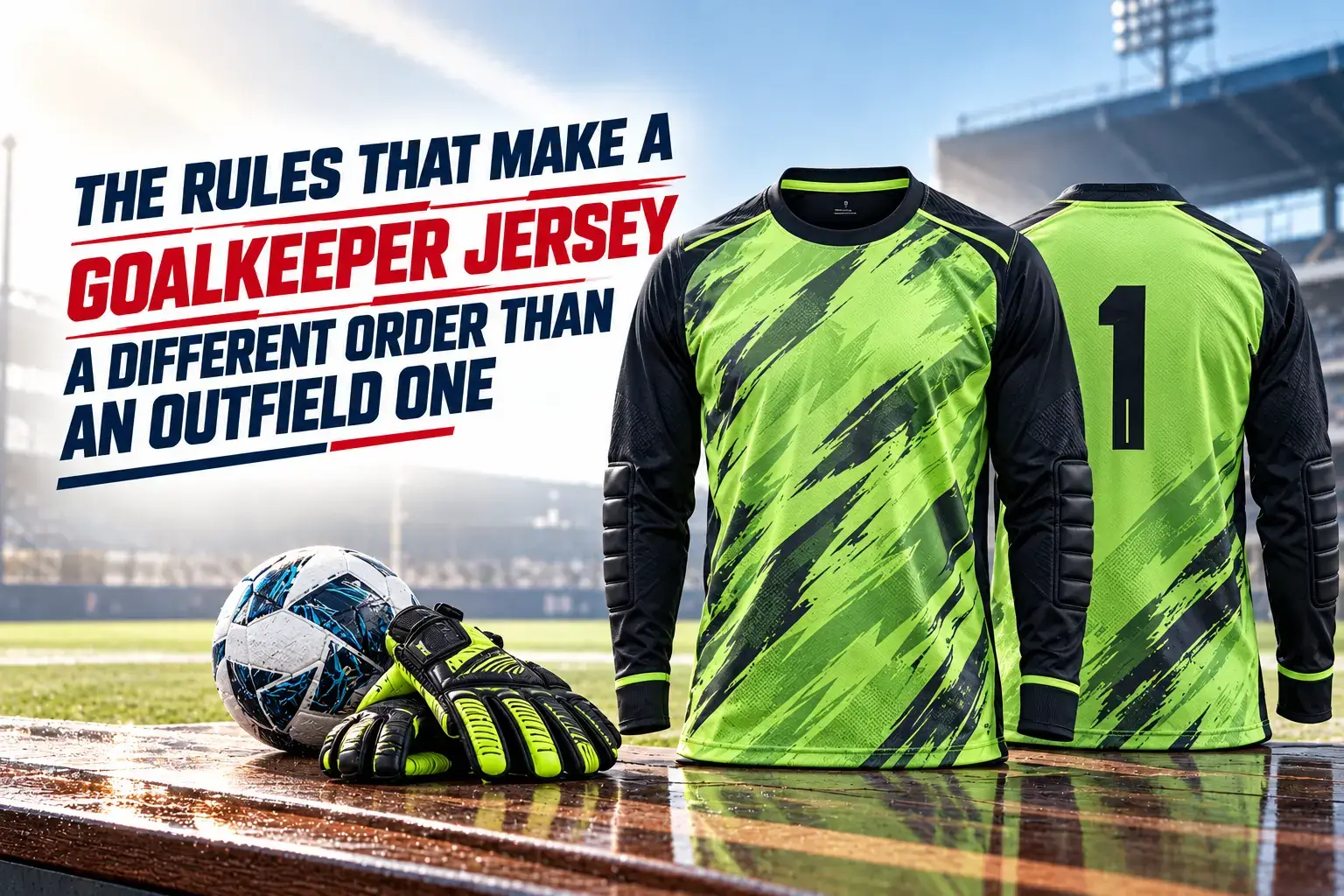
Every outfield jersey on a roster shares one baseline: crew, V-neck, or Henley collar, the two-fabric torso-and-underarm build above, sublimated to your crest, sponsor panel, and squad number. A goalkeeper jersey shares almost none of that baseline, which is exactly why it has to be quoted and ordered as its own line item rather than assumed to ride along with the outfield spec.
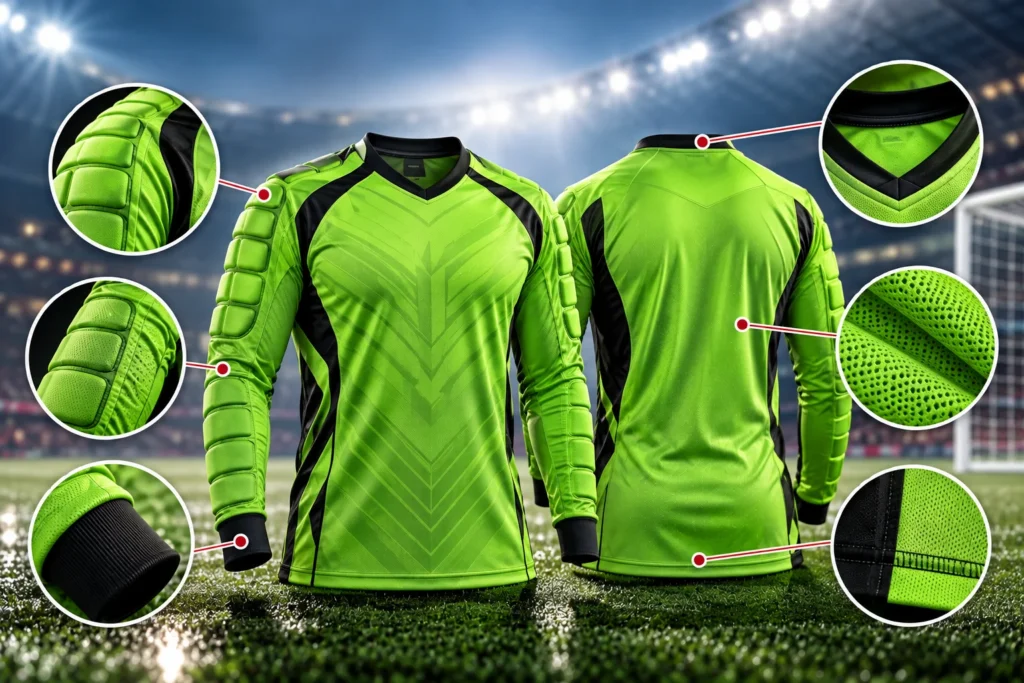
The build carries 8mm EVA foam at the elbows and hips, real cushioning for a keeper diving on turf or grass, not a sublimated graphic that only looks like padding. It runs in a high-contrast colourway, since a keeper’s jersey has to read differently from both teams and the referee at a glance. The chest and side fabric goes heavier and more abrasion-resistant than an outfield jersey’s, since keepers slide and dive far more than outfield players do, and the torso runs longer through the body for coverage during a save.
Each of those is a real material or labor cost, not a markup for a specialty position. Foam padding is a second component sewn into the garment. A contrast colourway is a separate dye lot from the rest of the squad’s kit. Heavier fabric and a longer pattern both use more material per jersey. A factory pricing a goalkeeper order is pricing all four against their own baseline, which is why listing goalkeeper jerseys as their own line item in a tech pack, rather than assuming the outfield spec covers them, is what actually gets an accurate number back.
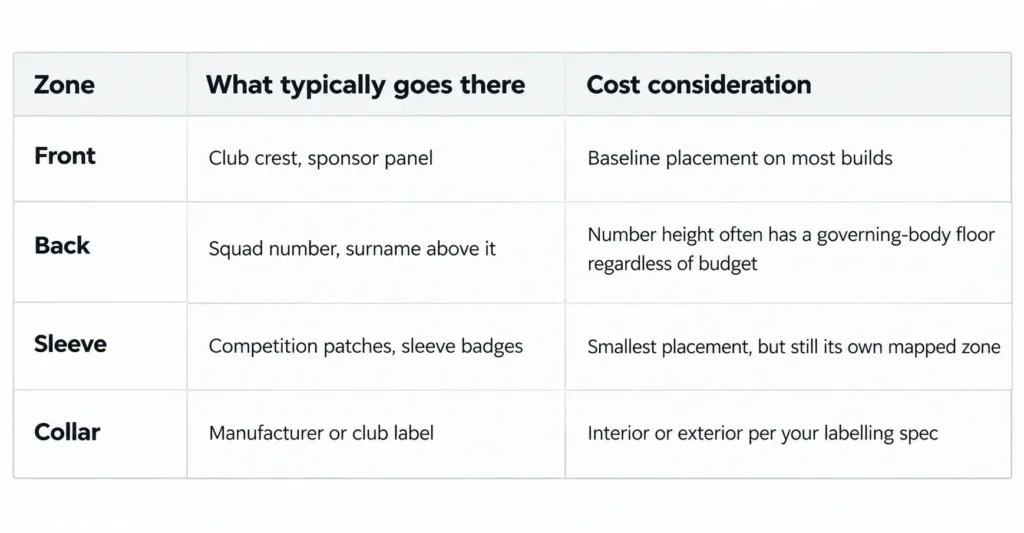
Sublimation prints dye directly into the fabric in one pass, so a fourth or fifth colour in a crest or sponsor panel doesn’t add a production step the way it would with screen printing. What does move the price is how much of the jersey’s surface carries decoration and where, since front, back, sleeve, and collar are four separate placements to map, not one design applied everywhere at once.
Placement gets more complicated on a goalkeeper jersey specifically, since print sits less cleanly over an internal foam panel than over flat fabric. Keeping decoration off the padded elbow and hip zones where possible is what keeps a design that looked right on an outfield mockup from distorting once it crosses onto the padded panel.
Number size and kit colour aren’t just house style either. IFAB’s Laws of the Game, Law 4 sets equipment rules including how a goalkeeper’s kit must read differently from both teams and the officials, which is the same rule driving the contrast-colourway requirement in the goalkeeper build above. A design that clears your own house style still has to clear that rule before it clears cost.
A jersey isn’t priced against the same baseline as a full kit, because jersey, shorts, and socks are each their own line item, not bundled into one price. Ordering jerseys alone is the common move for adding a goalkeeper jersey mid-season to a squad that already has its outfield kit sorted, replacing a handful of damaged jerseys, or topping up a colourway without reordering shorts and socks that still fit fine.
A new squad starting from zero is the case where ordering the full kit together makes more sense, since jersey, shorts, and socks combined reach one bulk quantity tier instead of three smaller ones priced separately. Which approach costs less depends on what a program is actually outfitting, not a blanket rule either way.
MOQ 20 applies per jersey design, and it isn’t cleared separately by every style on the roster. An academy running men’s, women’s, youth, and goalkeeper jerseys under one club badge can combine all of it into a single purchase order, as long as the combined total reaches 30. Each squad’s artwork and dye lot still get archived on their own record, so a reorder for one team next season doesn’t touch another team’s spec.
A quote request missing any of these turns into a round of questions instead of a same-day answer:
Call it a jersey or call it a kit, the underlying price question doesn’t change: two fabric zones, a goalkeeper build that stands apart from the outfield spec, and how much of the surface carries decoration. Colour count and crest complexity barely move the number. A club that lists goalkeeper jerseys as their own line item instead of assuming the outfield spec covers them, and combines every squad, outfield, women’s-cut, youth, and keeper, into one purchase order to clear MOQ 20, is pricing the way the factory actually builds the garment.
Send your style, decoration map, and order composition to the full soccer jersey line and get an exact quote back within 24 hours.